
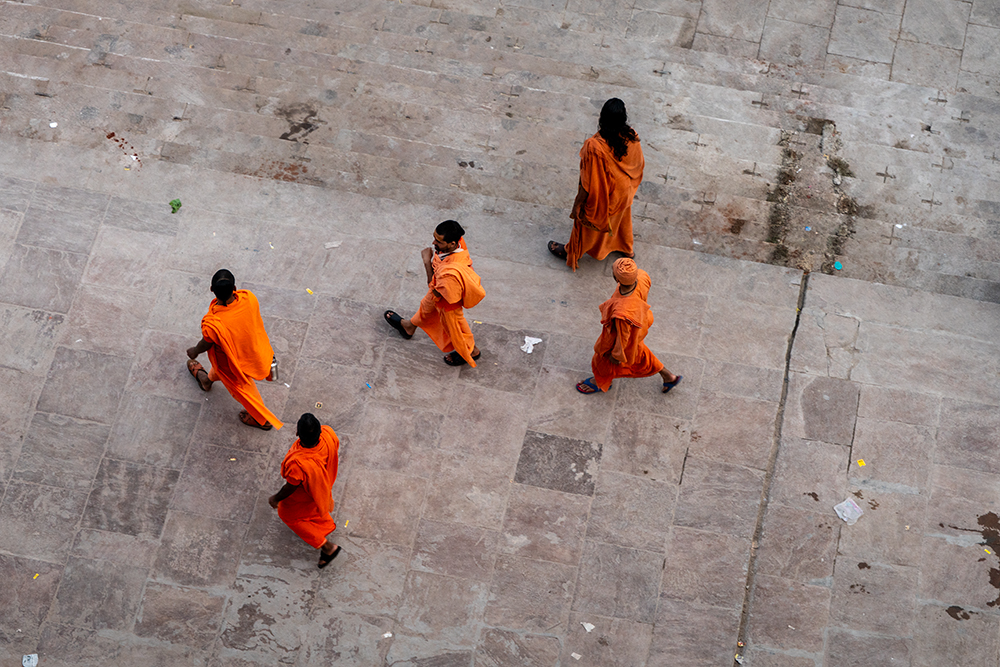

Street photography is all about capturing life as it unfolds, but good composition helps transform those spontaneous shots into compelling stories. Think of composition as your way to guide the viewer’s eyes and make sense of the beautiful chaos in front of you. Here are a few composition tricks that can make your street shots pop:
1. Rule of Thirds—But Don’t Stress About It
You’ve probably heard this one before: imagine your frame divided by two vertical and two horizontal lines, making a neat little grid. Try placing your subject at one of those intersections to create balance. For example, a person strolling through a crowded square placed off-center instantly makes the image more engaging. And remember, rules are there to be broken—don’t stress if it doesn’t always work out perfectly!
2. Leading Lines to Guide the Eye
Cities are full of lines—sidewalks, railings, even rows of streetlights. These lines can help guide the viewer’s gaze toward your subject or create a feeling of depth. If you’re photographing someone on a bridge, for instance, let the lines of the bridge lead right to them. It’s a simple trick, but it pulls people right into the image.
3. Framing with the City Itself
Urban environments are ideal for natural framing—think windows, doorways, or even the gap between two buildings. Framing draws attention to your subject and makes your shots feel layered and dimensional. Imagine catching a musician through a doorway or framing a quiet alleyway between tall buildings; it pulls viewers right into that little world you’re capturing.
4. Patterns and Symmetry—When You Find It, Embrace It
Cities are full of patterns, whether it’s rows of identical windows or the geometry of a building’s facade. When you find symmetry or repetition, lean into it. It brings a sense of calm and order to the image, even if the scene around it is bustling. Symmetry, especially in architecture, gives viewers a pleasant visual rhythm to follow.
5. Negative Space for Emphasis
Negative space is a fancy way of saying “empty areas” around your subject, and it’s incredibly effective in street photography. Let’s say you’ve got a lone figure against a wide, blank wall—that empty space draws all the focus to your subject and creates a bit of breathing room for the image. Sometimes, the simplest compositions are the most striking.
In the end, composition is just a tool to help you tell a story. Let it come naturally as you shoot, and don’t overthink it. When you get comfortable with these basics, you’ll find they start to happen instinctively. The magic of street photography lies in its rawness and honesty, so let composition be your silent guide, not a rigid rule.